


Exploring the Body Styles in the Chevrolet Electric Vehicle Lineup
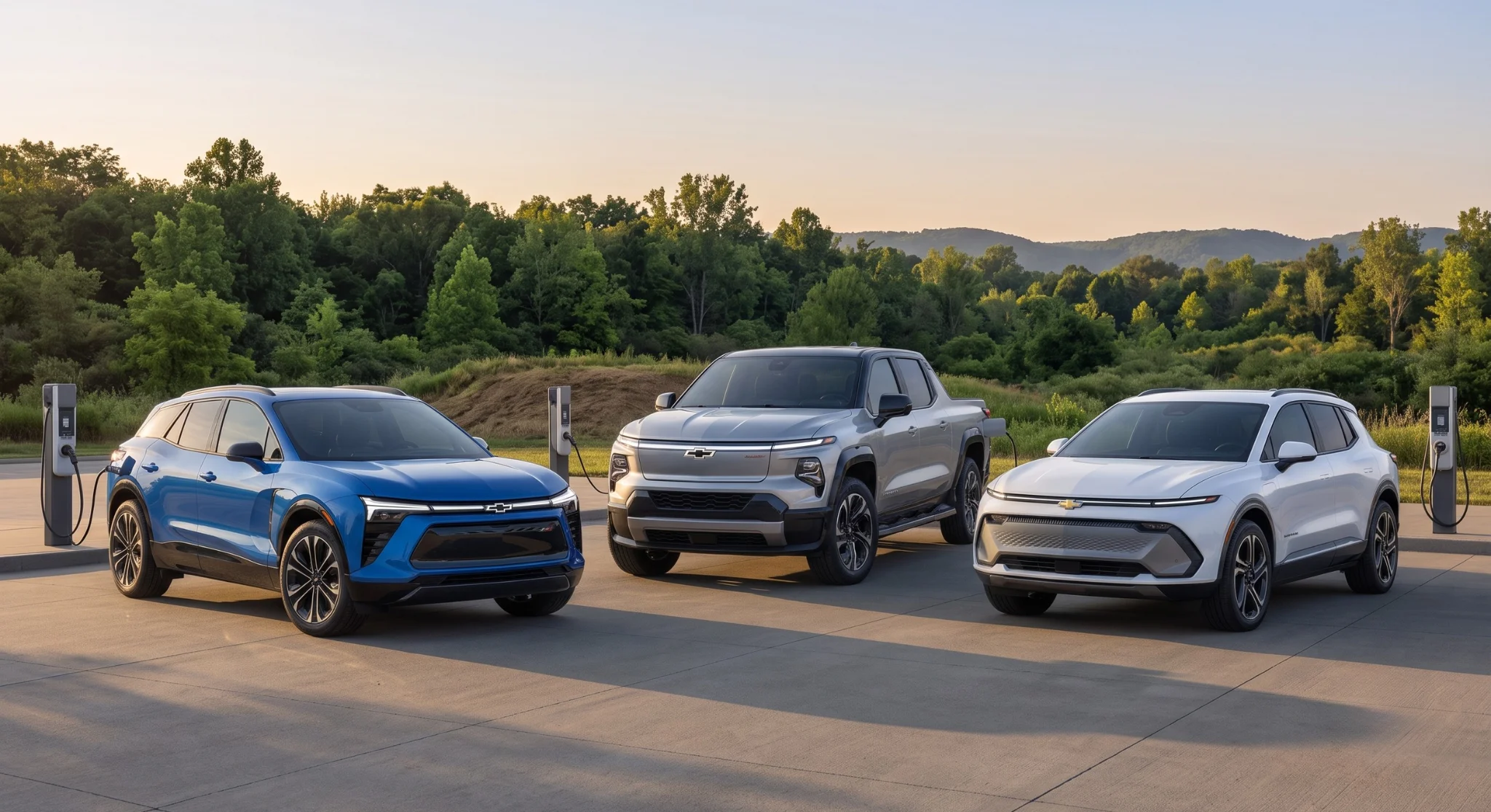
The shift to electric propulsion has changed how Chevrolet designs and builds its vehicles. Rather than adapting older gasoline platforms, Chevrolet engineered its current electric lineup on a dedicated EV architecture built to maximize interior space, structural rigidity, and driving range. That approach lets the brand offer genuinely distinct body styles — from an affordable compact hatchback and a compact SUV to a midsize SUV and a full-size pickup — so drivers across the Waxahachie area can match a configuration to how they actually drive.
Below is a plain-language look at each body style, what separates them, and how they charge — so you can narrow the lineup before you ever set foot in the showroom.
Choosing Between the Equinox EV and Blazer EV
For many families, the first real decision is compact versus midsize. The Equinox EV is Chevrolet’s accessible entry point into electric driving, starting around $36,795 MSRP, with an EPA-Estimated 319 miles of range on front-wheel-drive models — strong range for the price. With 26.4 cubic feet of cargo space behind the second row (57.2 with the seats folded), it handles groceries, strollers, and daily gear while staying easy to park.
The larger Blazer EV steps up to a midsize footprint, more power, and a sportier character, starting around $46,495 MSRP. Both SUVs use a 17.7-inch diagonal infotainment touchscreen and advanced driver-assistance features from the standard Chevy Safety Assist suite, and both rely on thermal-management systems that help protect the battery through hot Texas summers.
Equinox EV
- Body class: Compact SUV
- Starting MSRP: ~$36,795
- EPA-Estimated range (FWD): 319 miles
- Max cargo volume: 57.2 cu ft
- Powertrain: FWD or AWD
Blazer EV
- Body class: Midsize SUV
- Starting MSRP: ~$46,495
- EPA-Estimated range (FWD): 312 miles
- Max cargo volume: 59.1 cu ft
- Powertrain: FWD, AWD, or high-performance SS (AWD)
Manufacturer’s Suggested Retail Price (MSRP) for new vehicles includes manufacturer and distributor options and delivery, process and handling fees, which may be subject to change at any time. MSRP excludes taxes, title, license and dealer installed options, accessories, fees and charges. MSRP is not the dealer advertised price. Dealer price will vary. The dealer sets the final price.
EPA-estimated fuel economy figures are for comparison purposes only. Your actual mileage will vary depending on driving conditions, how you drive and maintain your vehicle, battery age/condition, and other factors.
How Range and Power Vary Across the Blazer EV
Drivetrain choice drives how far the Blazer EV travels on a charge. For 2026, the Blazer EV is offered in front-wheel drive and dual-motor all-wheel drive. Front-wheel-drive LT and RS models are the efficiency leaders at an EPA-Estimated 312 miles, while the dual-motor all-wheel-drive versions trade a little range for added traction and power.
At the top sits the performance-focused SS, which uses dual motors to produce 615 horsepower and 650 lb-ft of torque in Wide Open Watts (WOW) mode — enough for a GM-estimated 0–60 mph of about 3.4 seconds, while still returning an EPA-Estimated 302 miles from its larger battery.
| Blazer EV configuration | EPA-Estimated range | Horsepower | Battery |
|---|---|---|---|
| Front-wheel drive (LT/RS) | 312 miles | 220 hp | 85 kWh |
| All-wheel drive (LT/RS) | 283 miles | 300 hp | 85 kWh |
| SS (AWD, WOW mode) | 302 miles | 615 hp | 102 kWh |
EPA-estimated fuel economy figures are for comparison purposes only. Your actual mileage will vary depending on driving conditions, how you drive and maintain your vehicle, battery age/condition, and other factors.
The Silverado EV: A Long-Range Electric Pickup
Range leadership is where the Silverado EV stands out in the electric-pickup segment. In its Work Truck trim with the Max Range battery, the Silverado EV is rated at an EPA-Estimated 493 miles — enough to cover long work routes or towing days with a comfortable buffer, which matters because pulling a trailer meaningfully reduces real-world range.
When properly equipped, the Silverado EV is rated to tow up to 12,500 pounds and carry a payload of up to 1,800 pounds.
EPA-estimated fuel economy figures are for comparison purposes only. Your actual mileage will vary depending on driving conditions, how you drive and maintain your vehicle, battery age/condition, and other factors.
Maximum towing and payload capacity figures are based on properly equipped vehicles and vary by configuration. Do not exceed any weight rating. See your owner’s manual and the vehicle’s door-jamb label for specific capacities.
The Bolt EV: Chevy’s Affordable Electric Hatchback
Rounding out the lineup is the returning Bolt EV, a compact electric hatchback and Chevrolet’s most affordable EV, starting around $28,995 MSRP. It delivers an EPA-Estimated 262 miles of range from a 65-kWh battery and is notable as Chevrolet’s first vehicle with a native NACS charging port — meaning direct access to the Tesla Supercharger network without an adapter, with DC fast charging up to 150 kW (roughly 10–80% in about 26 minutes). The Bolt EV is a limited-run model, so availability is more constrained than the rest of the lineup.
Manufacturer’s Suggested Retail Price (MSRP) for new vehicles includes manufacturer and distributor options and delivery, process and handling fees, which may be subject to change at any time. MSRP excludes taxes, title, license and dealer installed options, accessories, fees and charges. MSRP is not the dealer advertised price. Dealer price will vary. The dealer sets the final price.
EPA-estimated fuel economy figures are for comparison purposes only. Your actual mileage will vary depending on driving conditions, how you drive and maintain your vehicle, battery age/condition, and other factors.
Charging Your Chevrolet EV at Home and on the Road
A common misconception among first-time EV buyers is that staying charged means frequent stops at public fast chargers. In reality, most charging happens overnight at home. On a Level 2 home charger, the Equinox EV can replenish from a low state of charge to full in roughly nine hours, so you start most mornings with a full battery. The Blazer EV likewise charges overnight on a Level 2 connection.
For longer trips, the Equinox EV, Blazer EV, and Silverado EV use a CCS charging port and can access the Tesla Supercharger network and other NACS stations via a GM-approved NACS adapter (the Bolt EV, as noted, has a native NACS port). On a 150-kW-or-faster DC fast charger, the Equinox EV can add about 100 miles of range in roughly 19 minutes. Efficiency features like Regen on Demand and One-Pedal Driving further extend real-world range by capturing energy during deceleration.
Quick Answers for Future Chevrolet EV Owners
What is the battery warranty coverage on a new Chevrolet EV?
Every new Chevrolet electric vehicle comes with an 8-year/100,000-mile battery warranty covering the high-voltage battery pack and its related components.
This information is provided for general educational purposes only and does not constitute legal advice. Warranty coverage depends on the specific terms of your vehicle’s warranty agreement. Consult your owner’s manual or a qualified legal professional for guidance on your individual situation.
Does Chevrolet provide roadside assistance for EV owners?
Yes. Chevrolet Roadside Assistance can be reached at 1-800-243-8872, with a dedicated EV line at 1-888-811-1926, for services such as towing to the nearest charging station or dealership.
Are there federal tax credits available for new electric vehicle purchases?
No. The federal clean vehicle tax credits, including the §30D and §25E programs, were terminated for vehicles acquired after September 30, 2025, under Public Law 119-21. The only exception is for buyers who entered a binding written contract and made a payment on or before September 30, 2025, and take delivery afterward. See the IRS clean vehicle guidance for details.
How does extremely hot weather affect a Chevrolet EV battery?
High summer temperatures prompt the vehicle’s active liquid-cooling system to run more often to keep the battery in its optimal range. To maximize range and comfort, pre-condition the cabin while the vehicle is still plugged in before you drive.
Starting Your Transition to a Chevrolet EV
From understanding home charging to comparing the driving dynamics of each body style, the Chevrolet electric lineup now spans an affordable hatchback, two SUVs, and a full-size pickup — so there’s a configuration for most drivers. Explore the models above to see which fits your routine.
Disclosures
Manufacturer’s Suggested Retail Price (MSRP) for new vehicles includes manufacturer and distributor options and delivery, process and handling fees, which may be subject to change at any time. MSRP excludes taxes, title, license and dealer installed options, accessories, fees and charges. MSRP is not the dealer advertised price. Dealer price will vary. The dealer sets the final price.
EPA-estimated fuel economy figures are for comparison purposes only. Your actual mileage will vary depending on driving conditions, how you drive and maintain your vehicle, battery age/condition, and other factors.
Maximum towing and payload capacity figures are based on properly equipped vehicles and vary by configuration. Do not exceed any weight rating. See your owner’s manual and the vehicle’s door-jamb label for specific capacities.
This information is provided for general educational purposes only and does not constitute legal advice. Warranty coverage depends on the specific terms of your vehicle’s warranty agreement. Consult your owner’s manual or a qualified legal professional for guidance on your individual situation.
0 comment(s) so far on Exploring the Body Styles in the Chevrolet Electric Vehicle Lineup