


How Often Should You Service Your Chevrolet Brakes? A Waxahachie Driver’s Guide
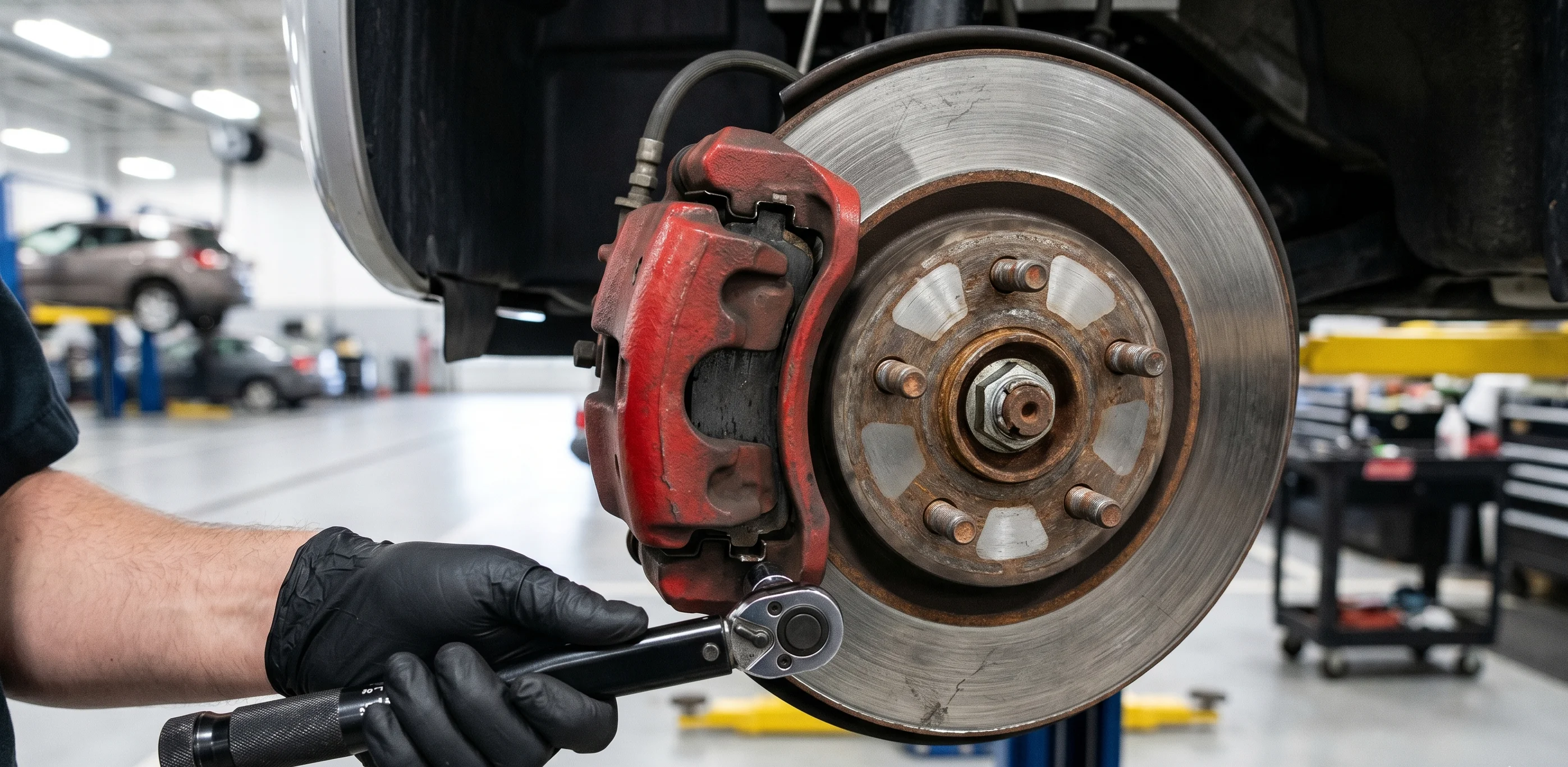
Your brakes are the single most important safety system on your vehicle — and at Legacy Chevrolet of Waxahachie, we want every driver in Ellis County and beyond to feel confident behind the wheel. Whether you’re commuting daily on I-35E, running errands in Midlothian, or making the drive up to Arlington, dependable braking is non-negotiable.
The challenge is that brake wear isn’t governed by a simple mileage number. Driving habits, road conditions, vehicle weight, and even your local terrain all factor in. This guide walks through what Chevrolet officially recommends, the warning signs every driver should know, what a professional brake service actually includes, and why Chevy Certified Service makes a measurable difference.
Ready to have your brakes inspected?
Or call our service team at (972) 268-9317
How Often Should Chevrolet Brakes Be Inspected?
Here’s something most generic brake guides get wrong: Chevrolet does not publish a fixed mileage interval for brake service. According to Chevrolet’s official guidance, there are no universal mileage intervals for brake service because brake wear varies significantly based on driving habits and conditions. That’s why every GM dealership inspects your brakes during every Multi-Point Vehicle Inspection — usually performed alongside routine oil changes and tire rotations.
A useful starting point for most drivers is an annual brake inspection or roughly every 12,000 miles, often paired with a tire rotation. But your real interval depends on how you drive:
| Driving Pattern | Brake Wear Impact | Recommended Action |
|---|---|---|
| Stop-and-go traffic (Arlington commute, urban driving) | Higher pad wear — frequent braking generates heat cycles | Inspect more frequently than annual |
| Heavy loads or trailer towing (common for Silverado, Suburban near Midlothian) | Significant added stress on entire braking system | Inspect every 6 months or with each oil change |
| Frequent short trips (Ennis, Desoto errands) | More brake heat cycles than long-distance driving | Annual inspection minimum |
| Highway-heavy driving (Corsicana routes, longer commutes) | Typically lower brake wear | Annual inspection acceptable |
| Aggressive braking habits | Accelerated pad wear regardless of total mileage | Inspect more frequently and reconsider driving style |
The honest answer: let your Chevy tell you when it needs attention. Modern Chevrolets are designed to do exactly that.
The Chevrolet Brake Pad Life Monitor: Your Built-In Early Warning
Many newer Chevrolet vehicles — including Silverado, Suburban, Tahoe, Colorado, and others — come equipped with a Brake Pad Life Monitor that displays in the Driver Information Center (DIC) on your instrument cluster.
Here’s how it works: the system uses an algorithm combined with wear sensors (typically one on the left front and one on the left rear) to estimate remaining brake pad life as a percentage for both the front and rear axles. As the pads wear, the sensors’ internal circuits open at progressively thinner pad thicknesses, and the Brake System Control Module adjusts its life estimate accordingly.
When the system determines that replacement is needed, you’ll see a message in the DIC — often including estimated mileage remaining. It’s a level of brake intelligence many competitors don’t offer, and it’s a strong reason to keep your Chevrolet maintained at a Chevrolet Certified Service center where technicians can properly reset the system after a brake job.
5 Warning Signs You Shouldn’t Ignore
Even with electronic monitoring, your brakes will often tell you something is wrong through physical symptoms first. Here’s what to watch — and listen — for:
| Warning Sign | What It Means | Urgency |
|---|---|---|
| High-pitched squeal when braking | Built-in wear indicator tabs are contacting the rotor — pads near minimum thickness (around 2mm of friction material remaining) | Schedule inspection within days |
| Grinding or growling noise | Pads are fully worn — the metal backing plate is contacting the rotor. Continued driving will damage rotors | Service immediately |
| Soft or spongy brake pedal | Air in the brake lines, a hydraulic leak, or contaminated brake fluid | Service immediately — stopping power compromised |
| Vehicle pulls to one side | Uneven pad wear, stuck caliper, or hose problem on one wheel | Schedule inspection promptly |
| Pedal pulsation or steering wheel vibration when braking | Rotor thickness variation (often misdescribed as “warped rotors”) | Service soon — affects stopping consistency |
A note on that last point: many shops call it “warped rotors,” but Chevrolet’s official technical position is more precise — pedal pulsation is caused by thickness variation in the rotor as it rotates through the caliper. The fix is the same (resurface or replace), but understanding the actual mechanism helps you have a better conversation with your service advisor.
Don’t wait for two or three of these signs to stack up. Catching brake wear early — at the squealer-tab stage — is the difference between a routine pad replacement and a much more expensive rotor or caliper repair.
What’s Included in a Chevrolet Brake Service?
A professional brake service at Legacy Chevrolet of Waxahachie covers far more than just swapping pads. Our Certified Service technicians perform a complete brake system inspection that includes:
| Inspection Point | What We Check |
|---|---|
| Brake pads | Friction material thickness on all four wheels (replacement recommended at or before 2mm thickness) |
| Rotors | Thickness variation, scoring, glazing, overall condition; resurfacing or replacement as needed (rotors are marked with a “minimum thickness” specification and must be replaced before reaching it) |
| Calipers and hardware | Sticking pistons, slide pin freedom, worn clips or springs |
| Brake fluid | Moisture content and contamination testing; flush service recommended when fluid degrades |
| Brake hoses and lines | Cracks, leaks, swelling, and corrosion |
| Parking brake | Proper engagement and release function |
If a Full Four-Wheel Brake Job Is Needed
A complete brake job typically includes:
| Step | Service Performed |
|---|---|
| 1 | Replacement of brake pads on all four wheels |
| 2 | Inspection — and resurfacing or replacement — of rotors based on condition and thickness |
| 3 | Hardware refresh (clips, shims, slide pin lubrication) |
| 4 | Brake fluid flush and refill if condition warrants |
Total cost varies by model, the parts tier selected (more on that below), and whether rotors need turning or replacement. We provide a transparent estimate before any work begins.
How Long Do Chevrolet Brake Pads Actually Last?
There’s a wide range, and it’s tied directly to how you drive. According to Chevrolet’s official brake service guidance:
| Component & Driving Condition | Expected Lifespan |
|---|---|
| Brake pads — severe use (heavy traffic, urban commuting, frequent heavy braking) | 20,000 to 25,000 miles |
| Brake pads — average use (mixed city and highway, moderate braking) | 40,000 to 60,000 miles |
| Brake rotors (varies by quality and conditions) | 30,000 to 70,000 miles |
Factors that shorten pad life include frequent heavy braking, elevated brake temperatures from high-speed or downhill braking, driving with the vehicle heavily loaded, and severe environments with high corrosion or road debris. Highway-heavy drivers near the rural stretches of Corsicana or Ennis often see noticeably longer pad life than urban Arlington commuters dealing with constant stop-and-go.
Why Chevrolet Certified Service Matters
This is where dealership service genuinely separates from a corner brake shop. Three reasons matter:
1. GM-Certified Technicians and the Multi-Point Vehicle Inspection
Every service visit at Legacy Chevrolet includes a Multi-Point Vehicle Inspection performed by Certified Service technicians — a bumper-to-bumper review covering brakes, tires, fluids, battery, suspension, and safety components. The form uses a color-coded scoring system, so you leave with a clear picture of your vehicle’s overall health, not just the issue you came in for:
| Color Code | What It Means |
|---|---|
| Red | Items that need immediate attention |
| Yellow | Items that should be addressed in the near future |
| Green | No items to address — component in good condition |
2. GM Genuine Parts and ACDelco — Designed Specifically for Your Chevy
Brake systems are engineered as complete systems. Factory-original braking performance can only be assured when using components designed and tested together. Legacy Chevrolet uses three quality tiers:
| Parts Tier | Best For | What You Get |
|---|---|---|
| GM Genuine Parts (OE) | Drivers who want factory-original performance | True OE parts installed during vehicle production; meets or exceeds all GM brake squeal and performance requirements; FNC (Ferritic Nitro-Carburized) coating on rotors for extra corrosion protection |
| ACDelco Gold (Professional) | High-quality aftermarket alternative backed by GM | Premium shims, slots, and chamfers designed to diminish noise, vibration, and braking harshness |
| ACDelco Silver (Advantage) | High-value, budget-conscious option backed by GM | Engineered to GM standards with a rigorous quality approval process |
This tiered approach lets us match the right parts to your driving needs and budget — something a generic brake shop can’t match because they don’t have access to GM-validated parts engineered specifically for your Silverado, Tahoe, Equinox, Traverse, or any other Chevy in our service bay.
3. Proper Reset of the Brake Pad Life Monitor
After a pad replacement, the Brake Pad Life Monitor must be reset for the system to track wear accurately on your new pads. A general repair shop without GM-specific tooling may not be able to perform this reset properly, leaving your DIC showing inaccurate information. Our Certified Service technicians handle this as a standard step of every brake job.
Protecting Your Family Across Ellis County and Beyond
Routine brake care isn’t just about avoiding repairs — it’s about consistent, confident stopping power every time you press the pedal. For families across Waxahachie, Midlothian, Ennis, Desoto, Corsicana, and Arlington, that means safer school runs, more reliable work commutes, and the peace of mind that your Chevy will perform when you need it most.
Catch problems early, follow your Chevy’s built-in monitoring system, and trust your brake work to the technicians trained specifically on your vehicle. That’s how a brake inspection becomes preventive care instead of an emergency repair.
Schedule Your Brake Service at Legacy Chevrolet of Waxahachie
Whether you’re noticing a warning sign, due for an annual inspection, or just want peace of mind before a long drive, our Certified Service team is ready to help.
| Contact Method | Details |
|---|---|
| Schedule online | Book a Brake Inspection |
| Call our service team | (972) 268-9317 |
| Service department | Legacy Chevrolet Service Center |
| Visit us | 1701 US-287 Byp, Waxahachie, TX 75165 |
Don’t wait until that squeal becomes a grind.
Disclaimers: Service pricing, parts availability, and offers are subject to change without notice and may vary by vehicle model, trim, parts tier selected, and individual vehicle condition. Contact Legacy Chevrolet of Waxahachie for a current estimate. Brake wear ranges, lifespan estimates, and service recommendations referenced in this article are general guidance only and may vary based on driving habits, environment, vehicle weight, road conditions, and other factors. A professional inspection by a Certified Service technician is required to determine the actual condition of your vehicle’s braking system and the specific service it needs.
0 comment(s) so far on How Often Should You Service Your Chevrolet Brakes? A Waxahachie Driver’s Guide