


Chevy Summer AC and Cooling Service in Waxahachie
What Components Are Inspected During a Chevy Summer AC and Cooling System Check?
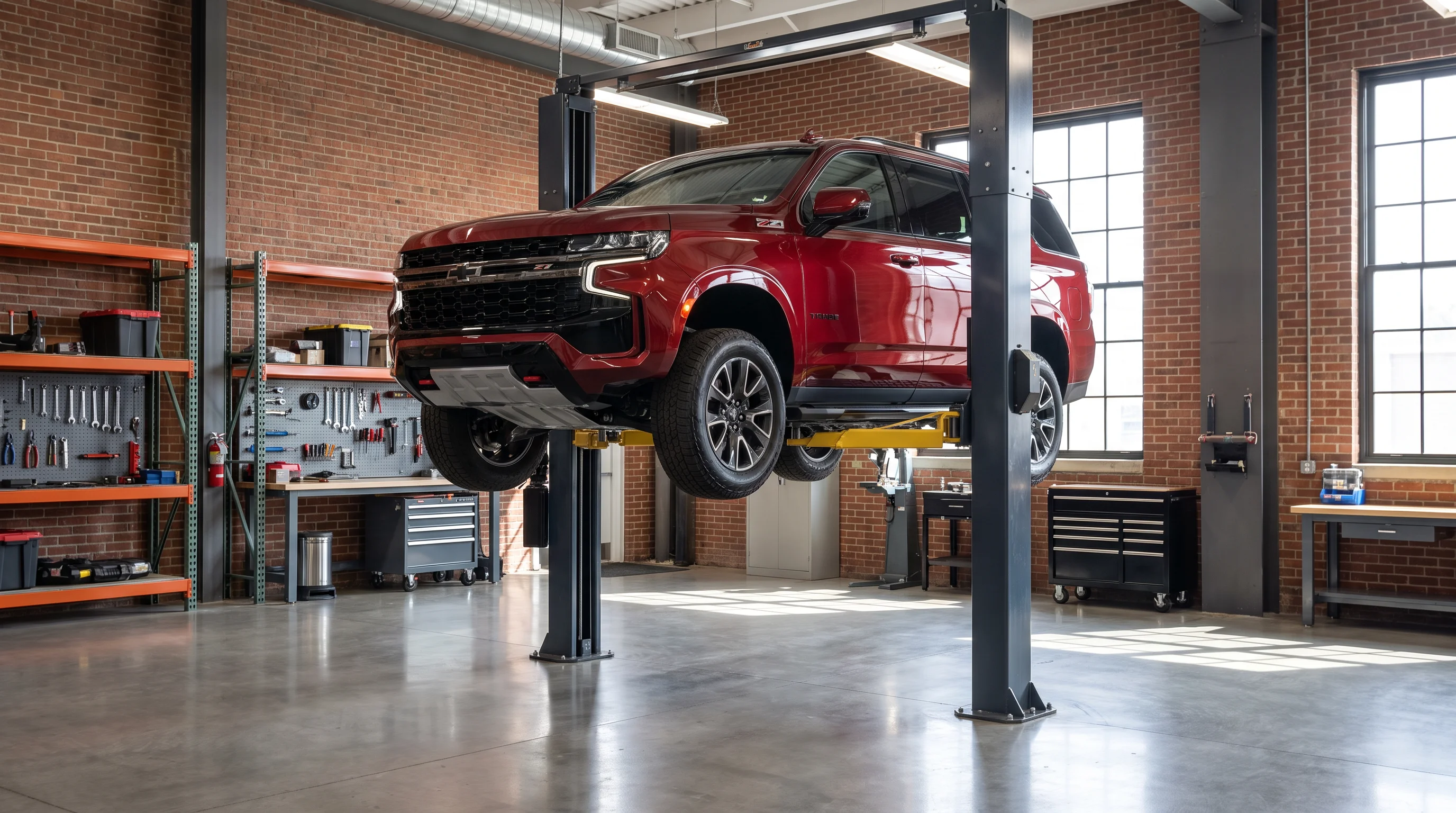
A Chevy summer A/C and cooling system check covers both climate systems at once. Technicians inspect the A/C compressor and clutch, condenser, evaporator, and cabin air filter. On the engine side, they check coolant level and condition, radiator hoses, the serpentine belt, thermostat, water pump, and the cooling system pressure cap, which is mounted on the surge tank on most current models.
They also connect manifold pressure gauges to read high- and low-side system pressure. Then they measure the air temperature at the vents and compare it to the outside air temperature and humidity. That temperature difference is judged against the specification for your specific vehicle, because the expected result changes with ambient conditions.
August is the hottest month of the year in Waxahachie. Average highs sit in the mid to upper 90s, and daily highs can push past 100, according to National Weather Service Fort Worth/Dallas climate normals. Your cooling system works harder in those conditions than at any other time of year. A Multi-Point Vehicle Inspection catches a small problem before it becomes a breakdown.
| Component | What Technicians Check | Why It Matters |
|---|---|---|
| A/C compressor and clutch | Fluid leaks, abnormal noise, and proper clutch engagement | The compressor circulates refrigerant. It is the first component at risk when the charge runs low. |
| Condenser and evaporator coils | Bent fins, road grit, and bug buildup | Blocked coils stop refrigerant from shedding heat. |
| Coolant level and Dex-Cool condition | Proper concentration in the expansion tank, plus rust or degradation | Dex-Cool is the GM original equipment coolant specification. |
| Radiator hoses and clamps | Soft spots, swelling, cracks, and loose fittings | Hoses run under high pressure and lose coolant fast when they fail. |
| Drive belts and tensioners | Cracking, fraying, and slipping | The belt drives the A/C compressor. On many engines it drives the water pump too. |
| Cabin air filter | Accumulated dust, pollen, and debris | A clogged filter chokes airflow to the HVAC blower motor. |
Do you notice warm air at the vents or an unusual belt squeal? Get the cooling system checked before your next long highway trip. Give our team a call or stop by our Waxahachie service center.
Why Does a Chevy AC System Lose Cooling Performance Over Time?
Refrigerant Loss Is Always a Leak
Refrigerant is not consumed during normal operation. If the charge is low, something is leaking. Air conditioning runs under high pressure, so even a small imperfection at a seal lets refrigerant escape slowly across several seasons.
Common leak points include the compressor front shaft seal, hose crimps, and O-ring fittings. Service port valves, the receiver-drier or accumulator depending on system design, and the evaporator core are also frequent culprits. Repeated under-hood heat cycling is hard on flexible seals and gaskets. Stop-and-go summer traffic keeps engine bay temperatures elevated for long stretches, which accelerates that wear.
Three Airflow Problems That Reduce Cooling
- Blocked grille and condenser coils. Dirt, leaves, and highway debris collect on the front of the condenser. That reduces airflow and stops hot refrigerant gas from condensing back into a liquid.
- Evaporator core frosting. A/C systems are designed to keep the evaporator above freezing. When the refrigerant charge drops, the evaporator surface can fall below 32°F. Moisture in the air then freezes on the fins and blocks airflow into the cabin.
- Blower motor strain. A dust-heavy cabin air filter restricts intake air. The blower motor draws more current while delivering noticeably weaker airflow at the vents.
Addressing a performance drop early protects the compressor. It depends on circulating refrigerant oil for lubrication.
How Do Technicians Test Chevy AC Compressors and Radiators for Leaks?
Testing the Engine Cooling Side
Technicians attach a pressure tester and bring the cooling system up to the rated pressure printed on the cap. Never exceed that rating. They then watch the gauge for a drop. A drop points to a hairline radiator crack, a weeping water pump gasket, or a heater core leak.
Finding Refrigerant Leaks
On the A/C side, technicians connect high- and low-side manifold gauges to measure operating pressures. From there, three methods narrow down the leak. These steps separate a mechanical compressor failure from simple fluid seepage.
| Method | How It Works | Best Suited For |
|---|---|---|
| Manifold pressure gauge analysis | Service couplers read high- and low-side pressure with the engine running | Confirming whether the compressor builds an adequate pressure differential |
| UV fluorescent dye | Dye is injected with refrigerant oil, circulated, then viewed under ultraviolet light | Slow leaks and intermittent leaks that do not show up during one visit |
| Electronic refrigerant detector | A sensitive probe traces seals, crimps, and fittings, then alarms on refrigerant | Tight spaces, hidden fittings, and suspected evaporator leaks |
The same visit can cover both systems. The equipment overlaps, so one appointment evaluates the refrigerant circuit and the engine cooling loop together.
How Long Does a Chevrolet Cabin Air Filter Last?
Chevrolet’s Recommended Interval
Chevrolet Certified Service recommends inspecting the cabin air filter after about two years on the road, or somewhere around 22,500 to 24,000 miles. At that point it will likely need replacing. You can confirm the exact interval for your vehicle in the Chevrolet maintenance guidance or your owner’s manual.
Severe conditions shorten that window. Heavy dust, high pollen counts, extended idling, and frequent gravel or unpaved road driving all load the filter faster than ordinary highway use. Have it inspected at each service visit rather than waiting for the mileage marker alone.
One point worth clearing up: the engine air filter and the cabin air filter are different parts on different schedules. Chevrolet lists the engine air filter at roughly 12,000 to 15,000 miles. The cabin air filter runs much longer. Mixing up the two leads owners to replace the cabin filter far more often than Chevrolet recommends.
The cabin air filter sits inside the HVAC housing, on most Chevrolet models behind the glove compartment. It filters outside air before that air reaches the interior vents. In a Texas summer, air conditioning runs almost continuously. That pulls a large volume of fine dust and airborne allergens through the filter element. A fresh filter restores blower motor efficiency and helps the system cool the cabin faster.
Signs Your Cabin Air Filter Needs Replacement
- Reduced air volume at the dashboard vents, even with the blower on maximum.
- A persistent musty or damp odor when the climate control starts up.
- Whistling or strain noises from the blower motor housing under the dash.
Chevrolet Service Intervals That Affect Summer Cooling
Three scheduled services shape how your cooling system holds up in the heat. Chevrolet Certified Service publishes the following general guidance. Your owner’s manual is the final authority for your specific vehicle.
| Service | Chevrolet’s General Guidance | Why It Matters in Summer |
|---|---|---|
| Cabin air filter | Inspect at about 2 years or 22,500 to 24,000 miles, and likely replace | Restores vent airflow and reduces blower motor strain |
| Engine coolant flush | Around 60,000 miles | Fresh coolant moves heat away from the engine under load |
| Belts and hoses | Inspect and possibly replace by about 70,000 miles | Heat and daily wear are hard on belts and hoses |
What Factors Change the Cost of Chevy AC and Cooling Repair?
Repair cost depends on which component failed and how much diagnostic labor the job takes. It also depends on the refrigerant your vehicle uses. A hose replacement is straightforward. Replacing an internal evaporator core or an engine radiator takes far more shop time. Four variables shape most estimates on modern Chevrolet models.
Component Accessibility
A serpentine belt or an upper radiator hose takes minimal disassembly. A leaking evaporator core is a different job. It means removing dashboard panels, steering column supports, and center console assemblies.
Refrigerant Type
Older Chevrolet models use R-134a. General Motors began adopting R-1234yf with the 2013 model year, and newer Chevrolet models use it. The two cannot be mixed. The EPA requires unique service fittings for each refrigerant specifically to prevent that, and adapters are not permitted. The charge label under your hood identifies which one your vehicle uses.
System Contamination
When a compressor fails internally, metal debris circulates through the lines. The system then needs a full flush. The receiver-drier or accumulator and the expansion valve are replaced as well, so debris and saturated desiccant do not damage the new parts.
Electrical Diagnostics
Some climate faults are electrical rather than mechanical. Zone sensors, body control modules, and blend door actuators all require dedicated scan tool time to diagnose.
Drivers often ask our service team what cooling repairs run. The honest answer is that a minor hose leak or a worn belt caught during a routine inspection costs a fraction of an overheated engine or a seized compressor.
The information in this article is general guidance and does not constitute a specific diagnostic or repair recommendation for any individual vehicle. Repair and maintenance decisions should be made in consultation with a certified technician based on the specific condition of your vehicle.
Should You Choose a Dealership or Local Shop for Chevy AC Repair?
A Chevrolet dealership repairs your vehicle with factory-trained technicians, GM diagnostic software, and GM Genuine Parts and ACDelco Original Equipment parts. Independent shops may not have the model-specific diagnostic equipment these systems require. GM service information and bulletins are available to independent shops by subscription, so the practical differences come down to factory training, dealer-level tooling, and warranty and recall administration.
Four Dealership Advantages
- GM factory training. Technicians train on Chevrolet-specific powertrains and climate systems, including multi-zone automatic climate control.
- Warranty administration. Warranty and recall repairs must be diagnosed and completed by a GM dealer, and dealer service records document the maintenance history behind a claim.
- Direct technical support. Dealerships have direct access to General Motors engineering updates, recall notices, and revised service procedures.
- Exact-fit original equipment parts. GM Genuine Parts and ACDelco Original Equipment parts are engineered to the original specifications for your vehicle.
What Your Warranty Covers
Understand your coverage before you authorize a repair. A/C and cooling components fall under different terms.
| Coverage | Bumper-to-Bumper Limited Warranty | Powertrain Limited Warranty |
|---|---|---|
| Coverage term | 3 years or 36,000 miles, whichever comes first | 5 years or 60,000 miles, whichever comes first. Qualified fleet accounts and HD diesel pickups receive 5 years or 100,000 miles. |
| Relevance to A/C and cooling | Covers A/C compressors, evaporator cores, and climate control modules | Covers engine, transmission, and drive system components. Radiators, hoses, coolant, and cooling lines are specifically excluded from powertrain coverage. |
Source: Chevrolet warranty information and GM Fleet warranty programs.
Coverage applies to failures caused by defects in materials or workmanship. Wear items and scheduled maintenance are the owner’s responsibility, and that includes cabin air filters and fluid services. Full terms are published in Chevrolet’s warranty information, and your warranty booklet governs.
Federal law also protects your right to choose where routine maintenance is performed. Under the Magnuson-Moss Warranty Act (15 U.S.C. §§ 2301–2312), a manufacturer cannot void your warranty simply because an independent shop performed routine service or because an aftermarket part was installed. Warranty and recall repairs themselves must still be diagnosed and completed by a GM dealer.
This information is provided for general educational purposes only and does not constitute legal advice. Warranty coverage depends on the specific terms of your vehicle’s warranty agreement. Consult your owner’s manual or a qualified legal professional for guidance on your individual situation.
Common Questions About Chevy Summer Cooling and AC Service
Can a local repair shop handle both A/C and coolant service on my Chevy?
Local shops can handle basic A/C recharges and radiator hose replacements. Chevrolet dealerships add dealer-level GM diagnostic tools, GM Genuine Parts and ACDelco Original Equipment parts, and factory-trained technicians. For complex climate controls or multi-zone cooling systems, an authorized dealer can confirm proper calibration. Warranty and recall work is also handled directly at the dealership.
How do I know if my Chevy needs a refrigerant recharge or a mechanical repair?
Weak airflow with air that is only slightly cool usually points to a low refrigerant charge. Loud clicking, squealing under the hood, or a sudden total loss of cooling points to a compressor or belt problem instead. Technicians connect manifold pressure gauges and run leak tests to tell the difference. Remember that refrigerant is not consumed in normal operation, so a low charge always means there is a leak to find.
What happens if I drive my Chevrolet with low engine coolant during Texas summer?
Engine temperatures climb quickly when coolant is low. Sustained overheating can lead to head gasket damage and, in severe cases, engine failure. Chevrolet engines rely on the correct Dex-Cool coolant, the GM original equipment specification, to move heat through the radiator under load.
Is A/C repair covered under Chevrolet warranty coverage?
A/C compressors, evaporator cores, and climate control modules are covered under the bumper-to-bumper limited warranty. That coverage runs 3 years or 36,000 miles, whichever comes first, and applies when the failure results from a defect in materials or workmanship. Wear items such as cabin air filters are not covered, and neither are maintenance services like system flushes.
Why is inspecting the serpentine belt important for summer cooling?
The serpentine belt drives the A/C compressor. On many Chevrolet engines it drives the water pump as well. A worn, cracked, or slipping belt can weaken air conditioning performance and, on belt-driven water pump applications, affect engine cooling at the same time. Not every Chevrolet engine is arranged that way. The 2.0L Turbo drives its water pump from an internal chain, and the 2.7L TurboMax uses an electric water pump rather than an engine-driven one. Your technician can confirm which arrangement your vehicle uses.
Keep Your Chevrolet Cool on Texas Roads
A cool cabin and a stable engine temperature make a real difference through a Waxahachie summer. Proactive service protects your engine and keeps your family comfortable on every trip. That is true whether you need a cabin filter replacement or a full cooling system inspection.
Our factory-trained technicians at Legacy Chevrolet of Waxahachie use dealer-level GM tools along with GM Genuine Parts and ACDelco Original Equipment parts. We service trucks, cars, and SUVs for drivers across Waxahachie, Midlothian, and Ennis. Don’t wait for warm air or a warning light to disrupt your plans. Review our current service and parts specials before you book, or browse more Chevrolet service and parts tips for seasonal maintenance guidance.