


2026 Chevrolet Traverse MPG: EPA-Estimated Fuel Economy Guide
The 2026 Chevrolet Traverse is one of the most practical three-row SUVs on the Waxahachie market, and for families weighing cost of ownership, fuel economy is usually near the top of the list. The EPA’s fuel economy ratings give shoppers a standardized way to compare vehicles before they ever set foot on a lot. For the 2026 Traverse, the EPA-estimated numbers vary depending on which drivetrain you choose — front-wheel drive (FWD) or all-wheel drive (AWD) — and understanding that distinction is the key to setting realistic expectations.
The 2026 Traverse uses a 2.5-liter turbocharged four-cylinder paired with an eight-speed automatic transmission. FWD models carry an EPA-estimated 20 MPG city, 26 MPG highway, and 22 MPG combined. AWD models are rated at an EPA-estimated 20 MPG city, 24 MPG highway, and 21 MPG combined. The Z71 trim is AWD-only, so it lands at the AWD EPA-estimated figures regardless of how you configure it; the LT, RS, and High Country trims are offered in either drivetrain.
For Waxahachie drivers handling school runs, errands across Midlothian, or weekend trips out toward Ennis or Corsicana, those EPA-estimated numbers translate into real cost-of-ownership math. Real-world mileage will swing based on driving habits, terrain, weather, and load, but the EPA estimates are a reliable starting point. Below, we walk through fuel type, tank capacity and driving range, the engine change that brought these numbers about, and a few practical habits that help Traverse owners get closer to the EPA-estimated figures every tank.
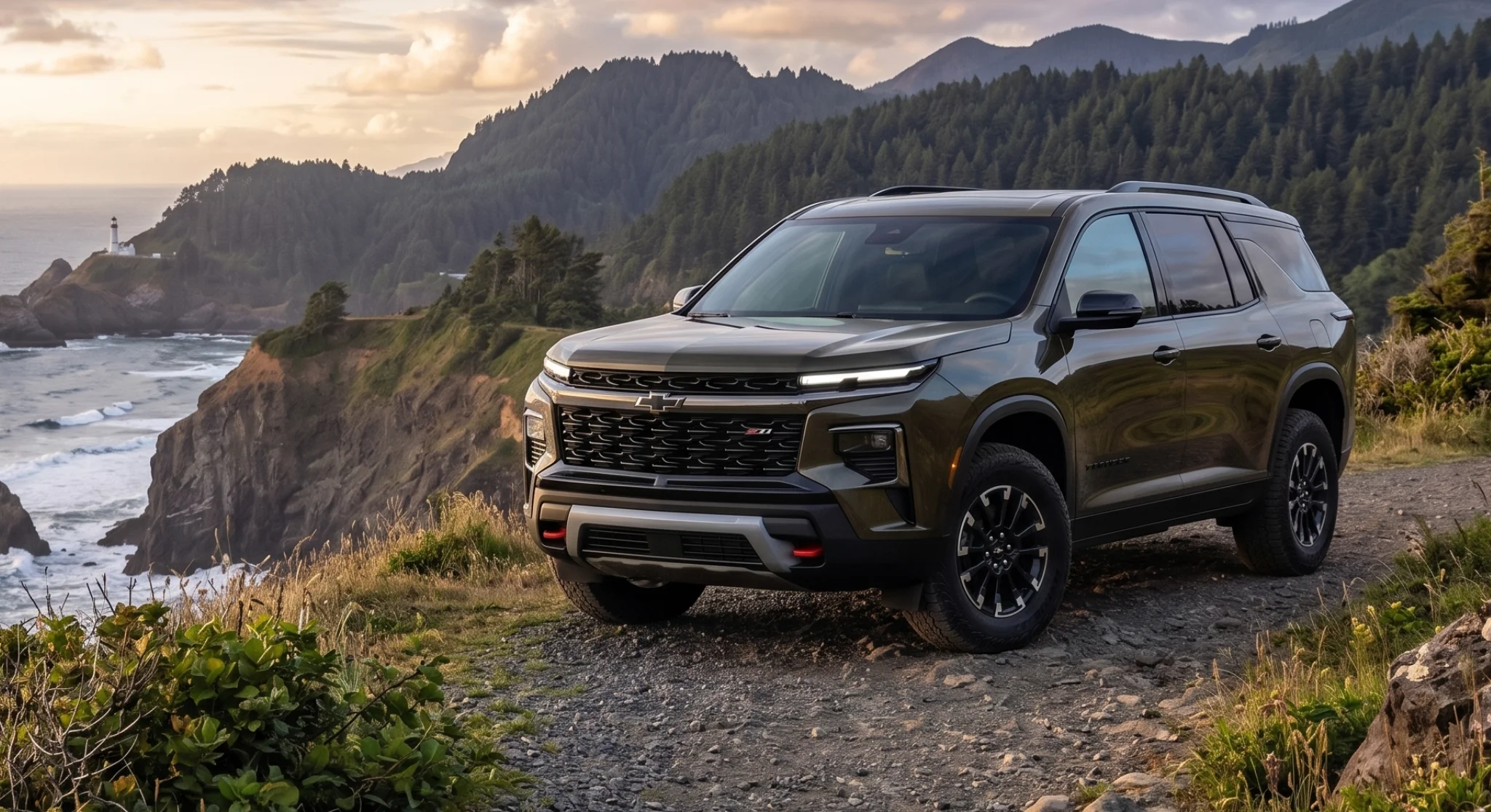
2026 Chevrolet Traverse EPA-Estimated MPG by Drivetrain
Here is how the EPA-estimated fuel economy numbers break out between FWD and AWD configurations for the 2026 Traverse. The Z71 trim is AWD-only; every other trim lets you pick the drivetrain that fits how and where you drive.
| Drivetrain | EPA-Est. City MPG | EPA-Est. Highway MPG | EPA-Est. Combined MPG |
|---|---|---|---|
| Front-Wheel Drive (FWD) | 20 | 26 | 22 |
| All-Wheel Drive (AWD) | 20 | 24 | 21 |
2026 Traverse Trim and Drivetrain Availability
If fuel economy is the deciding factor, the FWD configuration is the most efficient choice. Drivers who need AWD for weather, light off-road use, or towing stability will give up about 2 MPG combined in exchange for the added traction. Here is how the 2026 lineup breaks out.
| Trim | FWD | AWD |
|---|---|---|
| LT | Available | Available |
| Z71 | Not Offered | Standard (AWD-only) |
| RS | Available | Available |
| High Country | Available | Available |
Does the 2026 Traverse Require Premium Gas?
No. The 2026 Chevrolet Traverse is engineered to run on regular unleaded gasoline with an octane rating of 87 or higher. There is no premium fuel requirement, which keeps fuel costs predictable for Waxahachie and Corsicana drivers who already factor in fluctuating pump prices.
The 2.5-liter turbocharged four-cylinder produces 328 horsepower and 326 lb-ft of torque on regular 87-octane fuel — output that closely matches the previous V6’s headline numbers without the higher-octane fuel some turbocharged engines demand. For families running errands, commuting, or pulling a light trailer, that means responsive performance on the same gas they’re already buying.
Operating on regular fuel also simplifies day-to-day logistics. Every gas station in Ellis County and across the metroplex carries 87-octane, and there’s no second-guessing pump grades during a road trip.
2026 Traverse Powertrain Quick Reference
| Specification | Detail |
|---|---|
| Engine | 2.5L Turbocharged Inline-4 |
| Horsepower | 328 hp |
| Torque | 326 lb-ft |
| Transmission | 8-speed automatic |
| Drivetrain | FWD standard; AWD available (standard on Z71) |
| Fuel Type | Regular unleaded (87 octane minimum) |
| Towing Capacity | Up to 5,000 lbs (properly equipped) |
Fuel Tank Capacity and Driving Range for Waxahachie Families
Fuel tank size shifts depending on drivetrain. FWD models hold approximately 19.4 gallons. AWD models hold approximately 21.7 gallons — the larger tank helps offset the slight efficiency cost of all-wheel drive.
Paired with the EPA-estimated 22 MPG combined for FWD, that 19.4-gallon tank gives an estimated driving range of roughly 427 miles between fill-ups under ideal conditions. AWD models, at an EPA-estimated 21 MPG combined and a 21.7-gallon tank, can stretch closer to 456 miles. Either way, that is enough range for a Waxahachie family to make a long weekend trip and back, or to handle a full week of suburban driving without a stop at the pump.
| Drivetrain | Fuel Tank Capacity | EPA-Est. Combined MPG | Estimated Driving Range |
|---|---|---|---|
| Front-Wheel Drive (FWD) | 19.4 gallons | 22 | ~427 miles |
| All-Wheel Drive (AWD) | 21.7 gallons | 21 | ~456 miles |
Real-world range varies, of course — towing a trailer, running the AC on a Texas August afternoon, or sitting in stop-and-go traffic on US-287 will all pull mileage below the EPA-estimated figures. Monitoring your average MPG through the Traverse’s driver information display is the easiest way to spot when habits or maintenance are affecting fuel economy.
If you are considering an upgrade, you can value your trade-in online to see what your current vehicle is worth toward a new Traverse.
The 2.5L Turbo vs. the Previous V6: What Changed
The 2026 Traverse uses the 2.5-liter turbocharged four-cylinder that replaced the older 3.6-liter naturally aspirated V6 starting with the 2024 model year. The new engine is the standout mechanical story of the current Traverse generation, and it is the reason EPA-estimated fuel economy looks the way it does today.
On paper, the turbo four-cylinder produces 328 horsepower and 326 lb-ft of torque — output that closely matches or slightly exceeds the previous V6. Power delivery is different, though. Forced induction means peak torque arrives at lower RPMs, which makes the Traverse feel more responsive in stop-and-go driving and on suburban roads around Midlothian. The eight-speed automatic transmission is calibrated to keep the engine in its efficient operating range during city driving and steady-state highway cruising.
The efficiency gain over the V6 is the headline. The 2026 Traverse is rated at an EPA-estimated 22 MPG combined for FWD models and an EPA-estimated 21 MPG combined for AWD models — meaningful improvements over what comparable V6 configurations delivered. The smaller displacement and modern direct-injection setup also produce lower tailpipe emissions.
There are trade-offs worth knowing about. Some drivers notice the four-cylinder does not sound or feel like a V6 under heavy acceleration. Chevrolet has tuned the powertrain to minimize turbo lag and noise, but the character is different. Towing capacity has held steady at up to 5,000 pounds when properly equipped, which covers most light trailers, small campers, and utility loads that Traverse owners in Arlington or DeSoto typically haul.
Practical Tips to Maximize Your 2026 Traverse’s EPA-Estimated Fuel Economy
Getting closer to the EPA-estimated 22 MPG combined (FWD) or EPA-estimated 21 MPG combined (AWD) comes down to a handful of habits and maintenance basics.
Smooth Acceleration
The Traverse’s turbocharged engine rewards steady inputs. Sudden throttle application demands more boost, which burns more fuel. On highway stretches around Midlothian or out toward Ennis, using cruise control to hold a steady speed will measurably improve real-world fuel economy.
Tire Pressure
Tire pressure is the cheapest fuel economy lever you have. Underinflated tires increase rolling resistance and pull mileage down quickly. Check tire pressure monthly and stick to the figures on the door-jamb sticker, not the maximum stamped on the sidewall.
Routine Maintenance
Regular maintenance keeps the engine running at peak efficiency. Fresh oil, clean filters, and a properly running ignition system all contribute. Following the Traverse’s recommended maintenance schedule prevents the slow MPG creep that comes with neglected service.
Combine Your Trips
Planning errands as a single loop instead of multiple cold-start trips will measurably improve real-world fuel economy. The 2.5L turbo runs most efficiently once it reaches operating temperature, so two short cold-start trips will consume more fuel than one longer combined trip covering the same total distance.
See the 2026 Chevrolet Traverse at Legacy Chevrolet of Waxahachie
To see how the 2026 Chevrolet Traverse fits your family’s daily driving, browse our Traverse inventory in Waxahachie or call our sales team at (972) 268-6126 to schedule a test drive.
EPA-estimated MPG. Actual mileage will vary based on options, driving conditions, driving habits, and vehicle condition. Estimated driving range figures are calculated using EPA-estimated combined MPG multiplied by fuel tank capacity and are provided for illustrative purposes only; real-world driving range will vary. See Legacy Chevrolet of Waxahachie for complete details.